
'Treating stock brokers as merchants for MDR is fundamentally misplaced.'

The Congress party has criticised the government's recent notification regarding UPI transactions, alleging it paves the way for users to be charged fees, particularly for transactions above Rs 2,000. The party claims the government lacks transparency and questions if the move is to benefit American firms. The government, however, states that charges are necessary for the system's sustainability and infrastructure upgrades, with the Finance Minister clarifying that Merchant Discount Rate (MDR) applies to merchants, not customers.

The Indian government has introduced a 0.4% Merchant Discount Rate (MDR) on UPI person-to-merchant (P2M) transactions exceeding Rs 2,000, effective October 15. This move ends nearly six years of fully free UPI payments, though person-to-person (P2P) transfers and small P2M payments remain free. The charges aim to bolster investment in UPI infrastructure, with specific exemptions and caps for essential sectors.

Indian factories saw an 8 per cent decline in gross fixed capital formation (GFCF) in FY25, marking the first drop since the pandemic, despite achieving record high employment generation, according to the latest Annual Survey of Industries (ASI) data.

The RSS-affiliated Swadeshi Jagran Manch (SJM) has urged the government to reconsider imposing a merchant discount rate (MDR) on UPI transactions above Rs 2,000, arguing that the costs do not warrant such a move. This comes after the government announced a 0.4 per cent fee on merchant transfers over Rs 2,000 from October 15, while assuring that person-to-person and small payments remain free. SJM co-convener Ashwani Mahajan highlighted that banks have not demanded MDR and that UPI has reduced their transaction costs.

Prime Minister Narendra Modi has urged for a global framework to combat cross-border cyber frauds and deepfakes, highlighting the need for governments, tech companies, telecom operators, and financial institutions to collaborate. Speaking at the India Mobile Congress 2026, Modi stressed that technology thrives on trust and that India is ready to share its expertise in tackling cyber threats. He also noted the rapid expansion of 5G and the success of digital governance initiatives like Direct Benefit Transfer.

India's markets regulator Sebi has launched 'Demat 2.0', a pilot project for tokenisation of corporate bonds, enabling atomic settlement through integration with RBI's wholesale CBDC. This new market infrastructure uses Distributed Ledger Technology (DLT) to make bond issuance, trading, and settlement faster and more efficient. India is the first country to issue corporate bonds natively on a distributed ledger with central bank digital currency settlement. Additionally, RBI Governor announced new UPI innovations: 'Tap & Pay' for faster POS transactions and MyUPI, an AI-powered customer support solution.

The Finance Ministry has clarified that the decision to impose a 0.4% Merchant Discount Rate (MDR) on UPI transactions above Rs 2,000 was made independently, refuting claims of foreign influence. The ministry stated the policy aims to build a self-sustaining digital payments ecosystem, with MDR funding infrastructure and supporting small merchants.

The Central Bureau of Investigation (CBI) has arrested Ankit Satishchandra Pandey in connection with a transnational cyber-financial fraud case. Pandey allegedly defrauded US nationals of over USD 7 million by impersonating US federal agency officials through illegal call centres in Gujarat, coercing victims into transferring funds and purchasing gold.

Andhra Pradesh and Punjab National Bank (PNB) have signed an MoU to establish the PNB Quantum Finance Hub at Amaravati Quantum Valley. This initiative aims to foster innovation and adopt next-generation technologies like AI and Quantum Computing in the banking sector, focusing on cybersecurity, fraud detection, and customer experience.

Experts laud the decision to impose a 0.4 per cent Merchant Discount Rate (MDR) on UPI transactions exceeding Rs 2,000, effective October 15. This move, along with a dedicated fund for small merchants, is seen as crucial for creating a sustainable digital payments ecosystem, incentivising expansion in rural areas, and funding innovation while keeping most transactions free for users.

The Insurance Regulatory and Development Authority of India (Irdai) has proposed a phased reduction in the expenses of management (EoM) limits for insurers, aiming to lower the overall cost of insurance and enhance returns for policyholders. The proposals also include a new framework for commissions, stricter measures against mis-selling, and mandatory cost audits.

'PowerBank-50 is now space proven, made in India, and ready for every satellite builder in the world.'

NPCI International and Uzbekistan's NIPC have partnered to enable UPI payments across Uzbekistan, allowing Indian tourists, business travellers, and students to make instant merchant payments using the UZQR code. This agreement, approved by RBI and CBU, integrates UPI with Uzbekistan's national payment system, HUMO, facilitating direct P2M payments from Indian bank accounts and reducing reliance on foreign exchange or international cards.

India's proposal to link BRICS payment systems, including central-bank digital currencies (CBDCs), was notably absent from the grouping's New Delhi Declaration, despite being a key agenda item for India's chairmanship. This omission leaves the 16-year effort for trade in local currencies without a settled payment architecture, with the declaration only 'acknowledging' the work of the BRICS Payment Task Force.

The challenge for India lies in navigating complex landscape to its best advantage. The BRICS Summit will test its navigation skills, asserts former foreign secretary Shyam Saran.
NPCI chief Dilip Asbe stated that only about 10 per cent of the total value of UPI transactions might see charges passed to consumers under the merchant discount rate (MDR). He clarified that large corporates are expected to absorb most costs, and a significant portion of transactions will remain charge-free. A new fund from MDR collection is also proposed to boost UPI acceptance among small merchants.

NPCI chief Dilip Asbe stated that only about 10% of UPI transaction value might see charges passed to consumers, primarily from large corporates already absorbing credit card fees. He highlighted that 80% of Merchant Discount Rate (MDR) would come from businesses with over Rs 1,000 crore turnover, and a significant portion of transactions will remain charge-free. A new fund, potentially Rs 3,000 crore, will also be created from MDR collection to support small merchants and accelerate UPI acceptance.

SEBI Chairman Tuhin Kanta Pandey stated that the National Stock Exchange (NSE) has not submitted any proposal seeking approval to trade on its own platform after getting listed, and such trading is currently not permitted. He also confirmed that SEBI would examine concerns raised by brokers and asset management companies regarding the new UPI Merchant Discount Rate (MDR) framework.

Meghalaya has shown significant progress in digital transactions and financial inclusion, recording 32.76 crore digital transactions and nearly 10 lakh Jan Dhan accounts by 2025-26. Efforts like the JAM Trinity and financial literacy programmes have expanded banking access, with a high percentage of bank account holders adopting digital modes. The next phase focuses on enhancing financial literacy and cyber resilience, especially in rural areas.

Russian President Vladimir Putin has proposed a new investment platform, based on the New Development Bank (NDB), to fund projects in trade, infrastructure, logistics, and technology across BRICS nations, emphasising that the grouping's expanding economic cooperation is not 'against anyone' but aims to advance members' national interests.

Industry experts advocate for India to develop its own artificial intelligence (AI) safety framework, distinct from US or EU models, to address unique challenges like deepfakes and cyberattacks. They call for a comprehensive commitment involving all stakeholders and a hybrid regulatory approach combining voluntary and binding measures, as the Indian government also considers new AI regulations.

'It's A Cat And Mouse Game.'

A career break does not erase the experience that came before it. But the labour market can act as though it does. The more women invest in building professional careers, the more costly an interruption can become. How, then, do we enable women to make a comeback? Whose responsibility is it? asks Radha Roy Biswas.
The Reserve Bank of India (RBI) has endorsed the introduction of a Merchant Discount Rate (MDR) on UPI transactions exceeding Rs 2,000, effective October 15. This move, which levies a 0.4 per cent fee on merchant payments above the threshold, aims to bolster the long-term sustainability and growth of India's digital payments ecosystem. The RBI clarified that person-to-person (P2P) transactions and small person-to-merchant (P2M) payments below Rs 2,000 will remain free for users, ensuring no direct charge on customers.

Bank credit to industry in India surged by 20 per cent year-on-year in July, significantly accelerating from the previous year, driven by strong expansion in sectors like engineering, gems and jewellery, and petroleum-related industries, according to the Reserve Bank of India (RBI). However, growth in gold loans, while still expanding, saw a sharp moderation.

The Congress party has criticised the government's new 0.4% charge on UPI transactions above Rs 2,000 for merchants, terming it a "Modi tax". Opposition leaders, including Rahul Gandhi and Mallikarjun Kharge, allege that this move will ultimately burden consumers through price hikes and accuse the government of succumbing to American pressure to dilute India's zero-MDR policy. The government states the charge will support banks and fintechs.

National Investment and Infrastructure Fund Limited (NIIF) has appointed Gauravjit Singh as managing partner to lead its global capital formation efforts. Simultaneously, PB Fintech's payment aggregator platform, PB Pay, has gone live, offering consolidated payment acceptance for merchants. In a move to enhance trade efficiency, the Directorate General of Foreign Trade (DGFT) has introduced open API integration for Certificate of Origin, allowing exporters to streamline their application processes.
The Indian government has mandated that banks and payment providers cannot levy charges on UPI transactions up to Rs 2,000 or on payments made via RuPay debit cards. This directive follows an amendment to the Payment and Settlement Systems Act, 2007, aiming to sustain and expand the digital payments ecosystem.
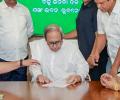
BJD chief Naveen Patnaik has voiced concerns over the Centre's decision to introduce Merchant Discount Rate (MDR) charges on UPI transactions above Rs 2,000 from October 15, urging protection for small traders and common people. This move has sparked a political debate, with the BJP defending the charges as beneficial for digital infrastructure and largely not impacting consumers, while the Congress and traders' associations criticise it as an additional burden.

Commercial banks in India recorded their highest credit growth in two years, accelerating to 18.6 per cent year-on-year by June 27, while also mobilising nearly 7 trillion in deposits, marking the third-highest fortnightly deposit growth in 29 years.
The Indian government has introduced a 0.4% transaction fee on Unified Payments Interface (UPI) payments exceeding Rs 2,000 for merchants, effective October 15, marking the end of nearly six years of free service. Person-to-person transfers and small-value transactions below Rs 2,000 remain free. The new Merchant Discount Rate (MDR) is capped at Rs 300 for transactions above Rs 75,000, with differentiated rates for essential sectors and investments, and safeguards to prevent costs from being passed to consumers.

UIDAI Chairman Neelkanth Mishra announced the extensive deployment of Artificial Intelligence to detect and counter fraud in Aadhaar, describing it as a "cat-and-mouse game." He highlighted the dramatic increase in daily Aadhaar authentications and the launch of the Aadhaar Face Authentication SDK and Sandbox to enhance security and ease of integration for ecosystem partners.

Union Communications Minister Jyotiraditya Scindia announced India's ambition to lead the world in 6G mobile technology and become a designer of global technology standards. Speaking at the Global Fintech Fest 2026, Scindia highlighted India's shift from being a technology market to a technology maker, emphasizing progress in 5G rollout, affordable data, and digital infrastructure driving fintech growth, while also stressing the importance of digital security.
RBI Deputy Governor S C Murmu stated that the introduction of merchant discount rate (MDR) on UPI transactions is unlikely to cause a shift back to cash, despite some concerns, emphasising that MDR will help the payments ecosystem recover costs.

The government is planning a postal logistics infrastructure upgrade for India Post to modernise parcel facilities, aligning them with those in developed nations, according to Communications Minister Jyotiraditya Scindia.

If the new MDR regime is rolled out from the middle of this month, as scheduled, it should count as one of the boldest political actions by the Modi government on an economic-policy issue, and a signal that it is less worried about erosion of political capital it draws from one of its key constituencies, notes A K Bhattacharya.

Making UPI payments fee-based for some transactions could enhance mental reservations against digital payments -- which have largely been overcome -- once more. Do we want to regress?, asks R Jagannthan.
Tata Consultancy Services (TCS) is focusing on building AI infrastructure, including India's first AI-focused data centre, as AI becomes a core operating foundation for enterprises globally.

Holding-company discounts and losses at key unlisted ventures could weigh on Tata Sons' IPO valuation, though its diversified portfolio may still command a premium.
